Why the Lekki-Epe Corridor Is Lagos’s Most Valuable Land Investment Zone in 2025
If you have been watching Lagos real estate closely, one trend is impossible to ignore: the Lekki-Epe corridor has become the city’s most powerful engine of land value growth. From Sangotedo to Abijo GRA, Ibeju-Lekki to Epe, this axis is no longer a future bet. It is a present reality, and investors who understand it are already building generational wealth.
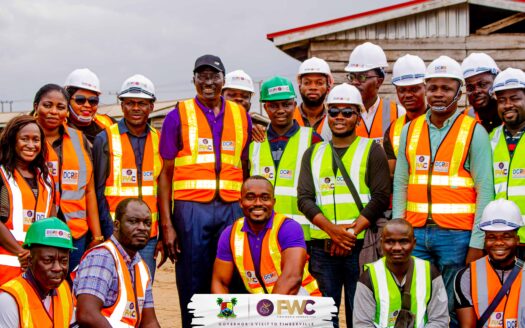
At First World Communities (FWC), we have been building communities along this corridor since 2008. What we have seen firsthand is that land here does not just appreciate. It transforms.
What Makes the Lekki-Epe Corridor So Significant?
The Lekki-Epe Expressway stretches over 50 kilometres, connecting the Lagos Island axis to a vast expanse of developable land. Unlike mainland Lagos, which is densely populated and largely built out, this corridor still offers strategic plots with legal titles, managed infrastructure, and direct access to landmark institutions and commercial zones.
Key drivers of the corridor’s value include:
- The Lekki Deep Seaport, one of the largest in West Africa, now operational and creating thousands of jobs and logistics demand
- The Dangote Refinery at Ibeju-Lekki, the world’s largest single-train refinery, attracting a surge of professionals, contractors, and support businesses
- The Lagos Free Trade Zone, which is drawing multinational investment and industrial activity
- The Lekki International Airport project, set to decongest Murtala Muhammed Airport and open up the eastern corridor
- Proximity to Lagos Business School, Greensprings School, and top-tier healthcare facilities
These are not speculative anchors. They are built realities and advanced projects that have already begun reshaping demand for land along the entire corridor.
Abijo GRA: The Only GRA on the Lekki Axis
Among the most compelling addresses on this corridor is Abijo Government Reserved Area, the only GRA developed on the Lekki axis. Developed as a site-and-services scheme by the Lagos State Government through the New Towns Development Authority (NTDA), Abijo GRA was designed to eventually hold over 5,000 homes with a town centre, recreational parks, and commercial zones.
First World Communities partnered directly with the Lagos State Government to execute major housing projects within this GRA, delivering over 700 homes across Chois Gardens (342 units) and Chois Oasis (112 units and growing) within its boundaries. These are not just houses. They are well-planned communities with documented land titles, access roads, drainage systems, and security infrastructure.
Abijo GRA sits at Kilometre 42 along the Lekki-Epe Expressway, which puts it within easy reach of Shoprite Sangotedo, Ikota Shopping Complex, and the Lagos Business School. As the Expressway expansion progresses, travel times are expected to decrease, which will increase the desirability of every plot in this zone even further.
Sangotedo and the Coop City Advantage
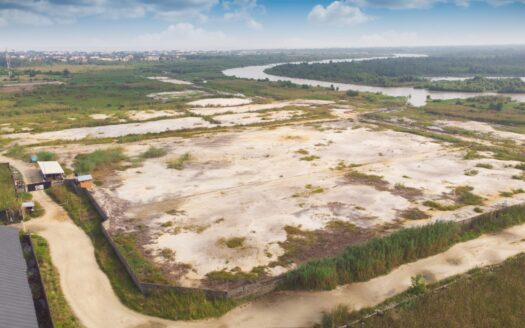
Another major FWC project is Coop City, located at 1 Coop City Way, Sangotedo. This is a land bank positioned adjacent to the well-established Co-operative Villas Estate in Badore, Ajah, and along the Omu Creek. Coop City carries a 1.5-kilometre shoreline along the Omu Creek, offering unique waterfront plots that are rare in any Lagos market.
Coop City features include:
- Aurora Campo: residential plots in a serene, planned environment
- Coop Meadows: green-area plots for family-oriented buyers
- Idera Park: premium waterfront land with creek-facing views
- Bulk Lands: available for developers and institutional buyers
The neighbourhood benefits of Coop City are considerable. Sky Mall, Lagos Business School, Shoprite Sangotedo, and the Cooperative Villas Estate itself are all within the immediate vicinity. This is what FWC calls a ‘mature neighbourhood advantage’: the community is already established, so buyers are not waiting for life to arrive. It is already there.
Why Land Remains the Smartest Investment in Lagos
Nigeria carries a housing deficit estimated between 17 and 21 million units. Lagos, as the country’s commercial capital, bears a disproportionate share of that deficit. Land prices have consistently outpaced inflation across the Lekki corridor, and with population growth showing no signs of slowing, demand will continue to exceed supply for the foreseeable future.
The Nigeria real estate sector is projected to grow at a compound annual rate of 7.52 percent, reaching over 3 trillion USD by 2028. In 2024, real estate already outperformed crude oil in GDP contribution for the first time, a significant milestone that signals the sector’s structural importance to the Nigerian economy.
For individual buyers, this means that land is not simply shelter. It is a store of value, a legacy asset, and in many cases a source of rental or development income.
First World Communities: Built on Proof, Not Promise
Since its incorporation in February 2008, First World Communities has completed over 1,600 homes and managed multiple large-scale land banking initiatives across the Lekki corridor. The company began with the Cooperative Villas Estate in Badore, Ajah, a community of over 600 homes that has become one of the most admired residential developments in West Africa.
Every FWC project is developed in partnership with legal frameworks, government agencies, and professional facilities managers. Buyers receive documented titles and join communities that are actively maintained, not left to deteriorate after sale.
When you invest with First World Communities on the Lekki-Epe corridor, you are not buying into a vision. You are joining a proven record. To explore available plots and land banking opportunities, visit www.firstworld-communities.com or contact the FWC team directly.